We reach for the page when life turns heavy — and few reached for it harder than Virginia Woolf. She kept a diary for most of her adult life and wrote some of the century’s greatest novels straight through recurring breakdowns. That makes her a rare and honest case study for a question worth asking plainly: when you are struggling, is writing good for you — or can it sometimes make things worse?
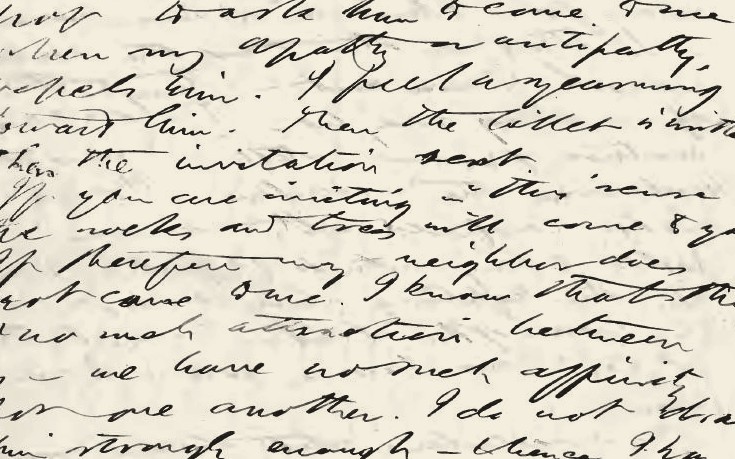
Woolf lived with what we would now call bipolar illness, and with real loss: her mother died when she was thirteen, her father when she was twenty-two, and she broke down again around the time of her first novel, The Voyage Out. Through all of it she turned to her diary — thirty volumes, kept from 1915 until weeks before her death — as a refuge. “A kindly blankfaced old confidante,” she called it (8 April 1921): the place she went when she could neither work nor cope.
The cure that banned her pen
It is tempting to call that “journaling as therapy.” But therapy, in anything like the modern sense, did not yet exist for her. In Woolf’s day the standard treatment for a woman in mental distress was the rest cure, devised by the American neurologist Silas Weir Mitchell: weeks of enforced bed rest, isolation, massage, a fattening diet that bordered on force-feeding — and a strict ban on reading and writing. Woolf endured it more than once, especially between 1913 and 1915, and was convinced it made her worse — a regimen the literary historian Anne Stiles has reconstructed in detail. The medicine of her era did not prescribe writing as healing. It confiscated her pen.
She took her revenge on the page. In Mrs Dalloway (1925) the shell-shocked Septimus Smith is delivered to the smooth, eminent Sir William Bradshaw, who prescribes “rest, rest, rest,” and whom Woolf skewers for worshipping “Proportion” while he “secluded her lunatics, forbade childbirth, penalised despair.” The novel is now read as one of literature’s sharpest indictments of that psychiatric culture — the critic Elaine Showalter, among others, places it squarely within that history. So when Woolf found relief at her own desk, she found it against the grain of the medicine meant to help her. That is part of what makes her worth listening to.
What the writing gave her
By her own account, the diary did two things at once. It kept her craft loose — the private page as a place to practise, away from the eyes she wrote for in public:
“It loosens the ligaments. Never mind the misses and the stumbles.” — Virginia Woolf, 20 April 1919
And it steadied her. “Melancholy diminishes as I write,” she noted on a black day in October 1920, before wondering why she did not do it more often. The scholar Thomas Caramagno goes further: in The Flight of the Mind (1992) he argues that Woolf used her illness “intelligently and creatively,” that her novels were a way to “imagine and master psychic fragmentation” rather than merely suffer it. More than a sedative, then, writing was how she made a frightening mind into something with shape and meaning — how she turned chaos into form.
She trusted, too, that writing settled the past into sense. “The past only comes back when the present runs so smoothly that it is like the sliding surface of a deep river. Then one sees through the surface to the depths,” she wrote in “A Sketch of the Past.” Modern psychology echoes the instinct: putting what happens to us into words helps us make a coherent story of it.
But the page is not a cure
And yet we have to be honest about where her story ends. On 28 March 1941, Virginia Woolf filled her coat pockets with stones and walked into the River Ouse. Writing helped her live, and helped her make extraordinary work; it did not save her. That is no argument against journaling. It is a guard against the tidy promise — that putting your feelings on a page is always, simply, good for you.
The research is just as sober. The largest analysis to date — a 2006 review pooling 146 trials — found the benefit real but small, and researchers note that writing about painful things reliably makes people feel worse before they feel better. When writing hardens into brooding — circling the same hurt without moving — it does not soothe at all. The psychologist Susan Nolen-Hoeksema, who spent her career studying rumination, found that this kind of circling deepens depression and anxiety rather than easing them. The same page can be a refuge or a rut.
Refuge or rut: the difference is in how you write
What decides which one you get? Not how much you write, but how. Nolen-Hoeksema’s research draws a line between brooding — replaying what is wrong, passively, on a loop — and reflection, the kind of inward turn that actually works something through; only the second tends to help. And in clinical trials, expressive writing lifts mood mainly by reducing brooding, not by piling on more introspection. So the instruction that follows is a plain one: write in a way that moves you somewhere, rather than round and round.
This is the whole reason we teach a shape for the practice rather than just “keep a journal.” A free page, on a bad day, can become a brooding machine. A little structure — a way in, a way through, and a way out — is what turns the writing from a rut back into a refuge.
Four practices, drawn from her pages
Woolf, for all her suffering, mostly wrote the reflective way — outward, into the world and the work, rather than round and round her own wound. Four habits from her diaries are worth borrowing.
Write without censoring — to begin. Woolf’s stream-of-consciousness style let her get thoughts down fast and unjudged, which eases the mental load and gets you past the blank page. Treat it as the way in, not the whole session: loosen up first, then turn outward.
Reflect on the ordinary. She prized the small, stray things her fast method swept up almost by accident. The diary, she wrote on 20 January 1919, “sweeps up accidentally several stray matters which I should exclude if I hesitated, but which are the diamonds of the dustheap.” Attending to ordinary detail pulls you out of the spiral and into your actual life.
Notice what you are grateful for. Woolf could be unguardedly happy on the page. “Life a cascade, a glissade, a torrent,” she wrote on 20 November 1927; “I think on the whole this is our happiest autumn.” Naming the good is one of the more reliable ways to lift mood — a deliberate counterweight to brooding.
Ground yourself in the senses. She often anchored herself in physical detail. Recalling mornings on the rocks at Cassis, she wrote on 8 April 1925: “We used to go out after breakfast and sit on the rocks, with the sun on us… The ragged red tulips were out in the fields.” This is close to what we now call mindfulness: returning to the present through the body, and writing it down.
What her diaries leave us
Woolf’s life holds both halves of the truth at once. Writing was, for her, a genuine refuge — a confidante, a way to make meaning from a mind that often frightened her, in a century that would sooner have silenced her with a rest cure. And it was not, on its own, enough to save her. Holding those two facts together is the honest, useful lesson: the page can help you carry a great deal — if you write your way through a thing, and not just around and around it.
So begin your own — gently, and with somewhere to go. See you on the page.
The research behind this
A historical case study, not medical advice. If you are struggling, please reach out to someone — a friend, a doctor, or a helpline. The claims above rest on:
- Woolf’s own words: A Writer’s Diary, ed. Leonard Woolf (1953); the “deep river” line from “A Sketch of the Past,” in Moments of Being (written 1939).
- Thomas C. Caramagno, The Flight of the Mind: Virginia Woolf’s Art and Manic-Depressive Illness (1992).
- Anne Stiles, “The Rest Cure, 1873–1925,” BRANCH (2012); Stephen Trombley, ‘All that Summer she was Mad’: Virginia Woolf and her Doctors (1981); Elaine Showalter, The Female Malady (1985).
- Sue Thomas, “Virginia Woolf’s Septimus Smith and Contemporary Perceptions of Shell Shock,” English Language Notes (1987); Woolf, Mrs Dalloway (1925).
- Joshua Frattaroli, “Experimental Disclosure and Its Moderators: A Meta-Analysis,” Psychological Bulletin (2006); Karen Baikie & Kay Wilhelm, “Emotional and physical health benefits of expressive writing,” Advances in Psychiatric Treatment (2005).
- Susan Nolen-Hoeksema, Blair Wisco & Sonja Lyubomirsky, “Rethinking Rumination,” Perspectives on Psychological Science (2008); Treynor, Gonzalez & Nolen-Hoeksema, “Rumination Reconsidered,” Cognitive Therapy and Research (2003); Gortner, Rude & Pennebaker, Behavior Therapy (2006).