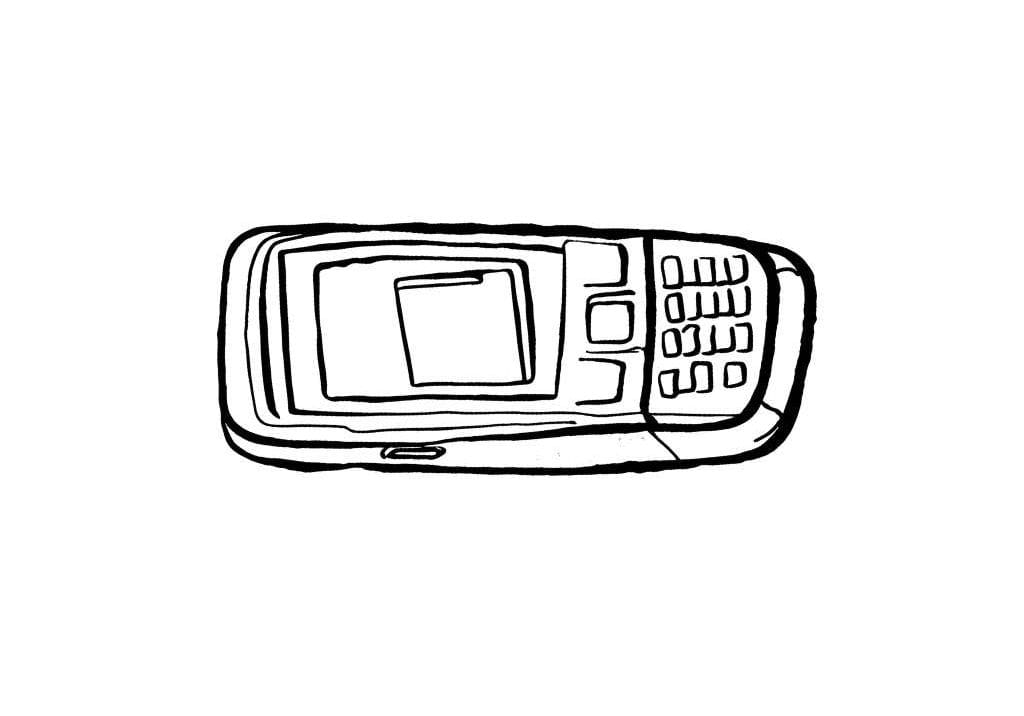
London, 2045. My digital diary chirps. "Update required!" I was texting myself. Half-formed thoughts on existence blink away on a dying screen. Try me in the morning. Welcome to the future of journaling, where even our deepest thoughts are at the mercy of app updates and cloud storage. Don't get me started on solar powered batteries. It all works, until it doesn't.
Progress began with a promise. Our thoughts would float eternally in the cloud, safe from coffee stains and rats and admin overwhelm. "Convenience costs!" they trumpeted. "Security is priceless!" they proclaimed. And like lemmings to a digital cliff, we followed. It was going to be quick, and it was going to be safe, and above all every big tech bro had the heart of a Catholic saint.
But I'm not alone in this glitchy wonderland where you rent space online to recall your own memories. In a cosmic joke of epic proportions, some of history's most celebrated journal-keepers have been thrust into our era. At least they could have. Let's call them Virginia, Anne and Franz — all grappling with the wonders of twenty-first-century info tech. Spoiler alert: it's not going well.
The great diarists meet the cloud
Picture Virginia Woolf in London, 2045. Her writing room now resembles a spacecraft's cockpit, cluttered with gleaming gadgets. While her vaccuum-robot saves her time, he's trying to capture her stream of consciousness via voice note, but her overzealous auto-correct has other plans. "To the lighthouse," she begins — only for the tablet to suggest, cheerfully, "To the lighthearted?" Her face contorts. "To the light beer?" the AI tries again. I swear I can see her contemplating a swim in the Thames, tablet in tow.
Meanwhile, in Amsterdam, young Anne Frank discovers that privacy in the digital age is as elusive as freedom itself. Hidden in her annex, she pours out her heart on a glowing screen. A peppy notification: "Your thoughts have successfully uploaded to the cloud!" In the meantime, an ad pops up. "Top ten hiding spots for the modern teen! Buy now!" Once it was the Gestapo she feared. Now it's data miners and targeted ads.
And then there's Kafka, in Prague, hunched over his tablet, typing furiously about alienation and existential dread. But when he hits save, his words vanish into a labyrinth of folders and subfolders. "If this isn't a true metamorphosis," he mutters, his mind spinning doom like a wheel, "I don't know what is." His work is now trapped in a castle of digital bureaucracy, guarded by the gatekeepers of two-factor authentication and biometric body scans.
I sympathise with their plight, for it mirrors my own daily struggle. Just yesterday I sat down to reflect on the nature of love, only to spend an hour trying to remember the password to my own thoughts. "Is it the name of my first pet, or my mother's maiden name?" By the time I gained access, my profound insights had evaporated like digital mist. Inspiration left a vague memory and an "incorrect password" message.
Sometimes the best way forward is to take a step back.
The revolution is written in ink
But our tale of woe takes an unexpected turn. In the darkest hour, there in a dusty corner of Virginia's study, beneath a stack of malfunctioning e-readers, lay a relic from a bygone era — a simple paper notebook.
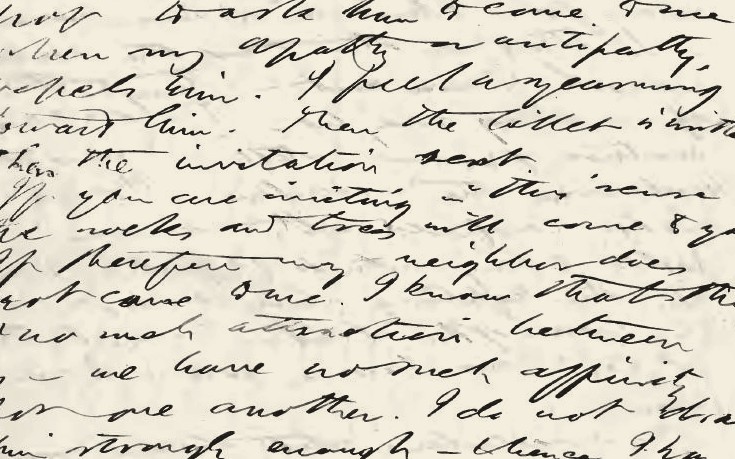
With trembling hands she opens it, inhaling the scent of times gone by. Her pen touches the paper, and suddenly the words flow like water. No interruptions, no glitches, no password required — just the gentle scratch of the nib against the page, thought solidifying into ink. "Finally," she sighs, "a stream of consciousness that doesn't require Wi-Fi."
The revolution spreads quickly. Anne finds an old diary in the floorboards and, for the first time since arriving in this bewildering future, gets down to the business of actually writing. "Dear Diary," she writes, "today I learned that some things are better left offline." Kafka, in a fit of frustration, knocks over a tower of old tablets to reveal a leather-bound journal beneath. As he writes, a peace washes over him. "The Trial is over," he muses. "Paper has been found innocent."
And me? I watch in awe as these giants of literature rediscover their voices, free from the shackles of our so-called progress. I reach for a pencil and a spare notebook, marvelling at its elegant simplicity. No updates. No compatibility issues. No terms of service to agree to. Just an empty page, waiting patiently for my thoughts.
So — is the latest digital journaling app really the future? Perhaps. But as I sit here, penning these words the old-fashioned way, I can't help but wonder if sometimes the best way forward is to take a step back. Now, if you'll excuse me, I have some writing to do. And this time I needn't worry about a software update or a dead battery. How's that for progress?
See you on the page.