We are the first modern people to be forgetting how to write by hand.
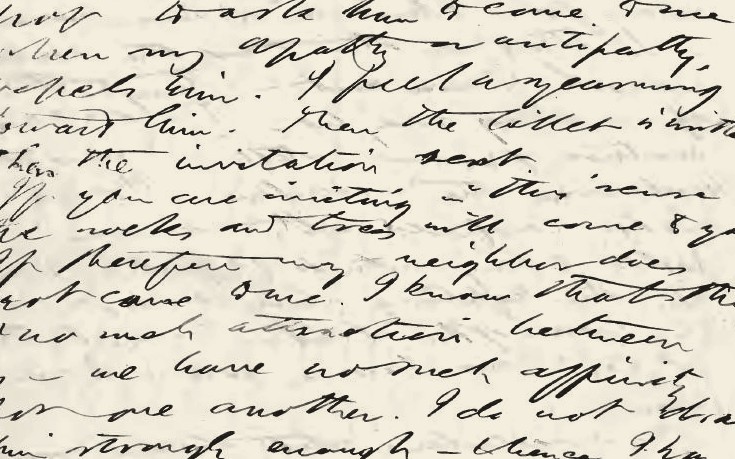
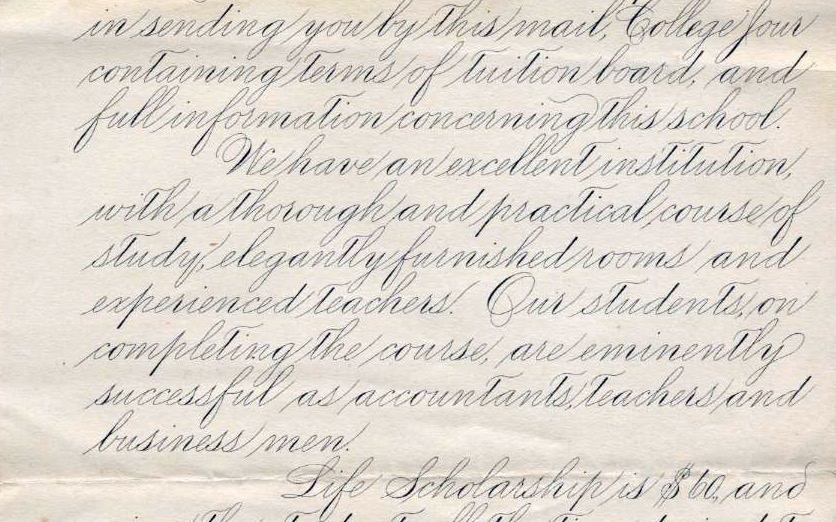
A student in Drew Gilpin Faust’s history seminar was presenting on a Civil War book when he admitted he couldn’t read the manuscripts inside it. They were in cursive. The historian polled her class. Two-thirds of her Harvard undergraduates couldn’t read cursive either — and one had passed up a project on Virginia Woolf rather than read her handwritten letters.
This is not only an American story. The United States cut cursive from its core curriculum in 2010. Finland stopped requiring it in 2016. Across the world, a generation is growing up able to read a screen but not a handwritten page. We are the first modern people to be forgetting how to write by hand.
There is a lot more at stake than a manual skill.
The vanishing hand
For a while, handwriting looked like good housekeeping. Writing cursive was a Victorian indulgence, like knowing how to churn butter. Then we started to see the cost. A 2025 survey of nearly six hundred British primary teachers found more than three-quarters reporting a decline in children’s fine motor skills since 2020: gripping a pencil, using scissors, forming a shape slowly enough to know it. Now, cursive is being written back into the curriculum across a wave of US states — but the reversal is not what is significant here. There is an admission beneath it. In setting down the pen, we set down something we never knew we held.
What the sensors saw
Handwriting trains the brain, and we were using far more of it than we knew. In 2024, two Norwegian researchers, Audrey van der Meer and Ruud van der Weel, wired thirty-six people to a 256-sensor net and watched them write — first by hand on the page, then on a keyboard. By hand, the net picked up dense, coordinated traffic between regions: sight passing to movement, movement to memory and meaning. On the keyboard, that traffic thinned to almost nothing. The regions stayed awake. They simply stopped passing messages to one another.
Why? The difference is almost mechanical. To form a letter by hand you have to plan its shape, steer your fingers, watch it appear, and adjust as you go. A key asks for none of that. Each letter is the same flat tap, and the hand learns nothing in making it. When a 2025 review in the journal Life gathered decades of brain imaging, it reached the same verdict: handwriting recruits a wide, well-connected neural network — motor cortex, the parietal lobe’s spatial maps, the hippocampus where memories form. Typing draws on only a small part of it.
To form a letter by hand you have to plan its shape, steer your fingers, watch it appear, and adjust as you go.
The body intimately knows the page
We like to talk about handwriting as though it happened in the brain. In reality, it happens in the hand. Anne Mangen, a neuroscientist, studies what she calls the haptics of writing — the plain physicality of pen on paper. The drag of the nib. The grain of the page beneath it. The feel of your own fingers shaping a curve, and the wet line left behind that wasn’t there a breath ago. Each letter sends the hand its own small signal, and that signal, Mangen argues, is part of how writing reaches us.
A keyboard offers none of it. Every key feels the same; the same flat tap makes an a or a z, with no shape to steer and nothing for the hand to feel. The letters arrive already made. The comparison studies overlook this, though your body never has: type, and your hands never touch the page at all.
When the mind is frightened
The brain is only half of it. The rest is how you feel.
When the mind is frightened, thinking does not slow down. It speeds up. Thoughts race, double back, and pile up faster than you can take in any single one. Most of us live there now. A keyboard suits that speed exactly: type as fast as you think, and you can outrun your own attention all day.
We tell ourselves we gave up the pen for speed. Speed, though, is also how we slip past ourselves. A pen is too slow for slipping: it keeps you with a thought long enough to feel it — including the ones you would rather skip.
Pen and paper will not let you skip. Handwriting sets a pace your hand can match but your panic cannot, and at that pace, something loosens. The evidence here is firm. Since James Pennebaker, a psychologist, began studying it in the 1980s, trial after trial has found the same result: spend fifteen minutes a day, for a few days, writing a hard experience out by hand, and you come away measurably less anxious. Some people are still healthier months on.
A worry left alone in the head goes round and round, the same alarm with nothing to break the circuit. Putting it on paper breaks the circuit three ways. First, the worry moves outside you, where you can look at it instead of out from behind it. Second, naming it in words hands the matter from the brain’s alarm to its judgement; under a scanner, the amygdala settles as the reasoning areas take over. Third, the slow, repeating motion of the hand does the work that rocking and slow breathing do — it tells the body the danger has passed. That is the regulation the review described: a nervous system easing down a gear.
The pen does one more thing a keyboard resists. Too slow to catch everything, it forces you to keep only what matters.
The pen makes you choose.
That choosing matters more than it looks. A frightened mind is flooded with too much at once — every worry shouting, none of them waiting its turn. Write a single line by hand and there is room for that line and no more; while your hand shapes it, the rest has to wait. To choose what to write is to rest your attention on one thing, and attention resting on one thing is where calm begins.
Handwriting is making a comeback
None of this is permanent. The hand is not lost, only out of practice — and practice forgives. Give it a page a day, and the old ease returns faster than it went. Something less expected returns with it.
Your thoughts stop sprinting ahead of you. They take shape on the page, where for once you can see them whole. In the pause between one word and the next — a pause the keyboard never gives — connections appear that you would otherwise have rushed past. Slowly, you can read your own mind again.
How to begin
You need no system, no beautiful notebook, no free hour — only a pen and ten slow minutes.
Try it first thing in the morning, before the day gets hold of you. No perfect grammar, no lofty purpose, no rereading. Just let the hand move.
When you’re stuck, set one word in the middle of a page and let it branch wherever it wants to go. The hand can discover links a typed list never will.
Through the day, keep a small notebook for the strays — the question that arrives in a queue at the pharmacy, the important insight you’d lose by evening. Writing it down by hand is how you tell yourself it mattered.
What we teach begins exactly with this first move. For the whole of it, our FOCUS Method sets out five movements you can return to on any page — and once a month we sit down to write together, in a free online Focus Session.
None of this is a war on screens. I’m writing to you on one; you’re reading on one. The point is older and smaller than that: when you want to be present to your own life — to think a thing through, to feel where you actually stand — set the screen down and connect intimately with the page by hand.
The students who can’t read cursive have lost more than a skill. A whole handwritten world is closing to them — old letters, diaries, the signatures of the dead, all in a hand they were never taught to read. You can still read it. You can still add to it.
To enjoy the benefits of writing by hand, you only have to begin.
See you on the page.
The research behind this
The claims above rest on:
- Audrey van der Meer & Ruud van der Weel, “Handwriting but not typewriting leads to widespread brain connectivity,” Frontiers in Psychology (2024).
- Giuseppe Marano et al., “The Neuroscience Behind Writing: Handwriting vs. Typing,” Life 15(3):345 (2025).
- Anne Mangen & Jean-Luc Velay, “Digitizing Literacy: Reflections on the Haptics of Writing” (2010); Mangen & Balsvik, “Pen or keyboard in beginning writing instruction? Some perspectives from embodied cognition” (2016).
- James W. Pennebaker, on expressive writing; Joshua Frattaroli, “Experimental Disclosure and Its Moderators: A Meta-Analysis,” Psychological Bulletin (2006); Karen Baikie & Kay Wilhelm, “Emotional and physical health benefits of expressive writing,” Advances in Psychiatric Treatment (2005).
- Matthew D. Lieberman et al., “Putting Feelings Into Words: Affect Labeling Disrupts Amygdala Activity,” Psychological Science (2007).
- Drew Gilpin Faust, “Gen Z Never Learned to Read Cursive,” The Atlantic (2022). On declining fine motor skills: a 2025 YouGov survey for art-K of UK primary-school teachers.
- On note-taking specifically, the much-cited Mueller & Oppenheimer (2014) result has had mixed replication; the brain-imaging, haptics and expressive-writing evidence above is the more robust ground this article stands on.